How Does PitchCom Work? MLB's Pitch-Calling System Explained
PitchCom sends pitch calls from a button-operated transmitter to audio receivers worn by players. A catcher or pitcher selects the call, an encrypted radio signal goes out, and the receivers play prerecorded audio identifying the pitch and its location.
If you have watched a pitcher reach toward his belt before delivering, or a catcher tap a controller instead of putting down fingers, you may be seeing PitchCom in use. PitchCom is not a live microphone conversation: hearing a teammate’s recorded voice does not mean that teammate is speaking into a headset.
From button press to pitch call
The transmitter and receiver do different jobs. One selects the message; the other plays it. According to PitchCom’s technical explanation, the process works like this:
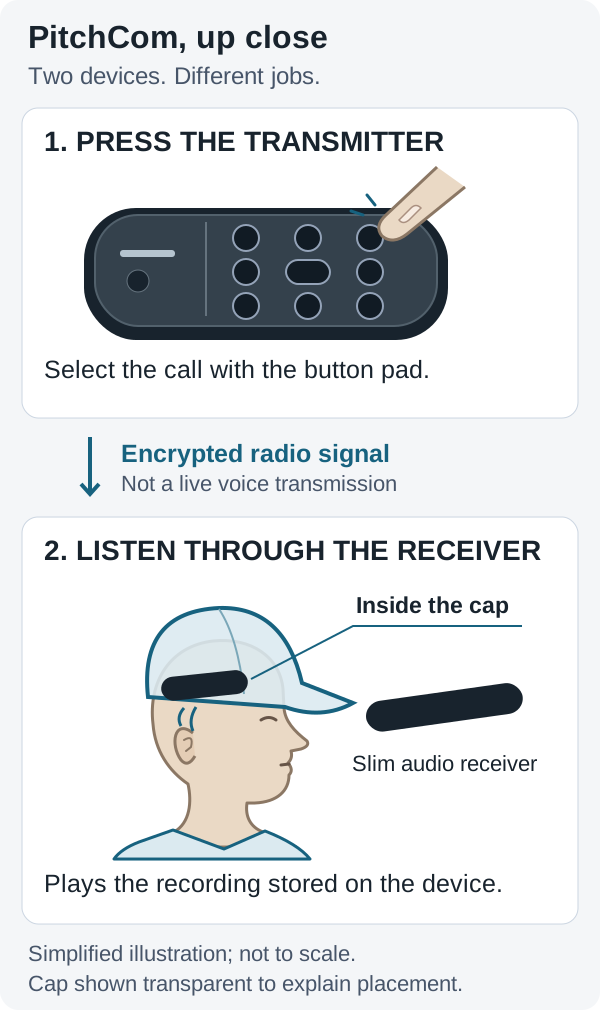
- A player presses one of the transmitter’s nine buttons, or a combination of buttons, to select a call.
- The transmitter sends an encrypted signal over a direct radio connection. It does not depend on a cellular or Wi-Fi network.
- The receiver plays the matching audio tracks, which are already stored on the device.
That last step explains why a walkie-talkie is the wrong comparison. The transmitter does not send a live voice recording across the field. It tells the receiver which stored message to play.
For example, a call could identify a fastball and then its intended location. Teams can customize the recordings, including the language, code words and voice. The equipment communicates the selection; it does not choose the best pitch for the hitter.
How does the pitcher hear PitchCom?
MLB’s original explanation describes a receiver inside the pitcher’s cap and another in the catcher’s helmet. PitchCom explains that the receiver has a speaker positioned close to and directed toward the ear. Players hear the call rather than reading it on a screen.
In its 2023 announcement expanding PitchCom use, MLB specified up to five receivers on the field for the defensive team. That means five in total, not five additional fielders beyond the pitcher and catcher. With both members of the battery wearing one, three other defenders can also hear the call.
MLB identified the middle infielders and center fielder as typical additional listeners in its introduction to the system. Knowing the pitch can help those fielders adjust their positioning before the ball is put in play.
The controller is a separate piece of equipment. MLB introduced the catcher’s transmitter as a device worn on a forearm sleeve; its later announcement described pitcher transmitters worn on the belt or the back of the glove.
Can the pitcher call his own pitches?
Yes. MLB introduced PitchCom in 2022 with catchers sending calls to pitchers. In 2023, it approved pitcher-operated transmitters, allowing the call to originate on the mound.
That announcement permitted two transmitters on the field at once, one for the pitcher and one for the catcher. The battery can decide who enters the call rather than requiring the catcher to make every selection.
Calling directly from the mound can cut down the back-and-forth of a pitcher rejecting pitches until the catcher reaches the one he wants. MLB highlighted that potential benefit when it expanded transmitter use alongside the introduction of the pitch timer.
Why replace finger signs?
MLB approved PitchCom as an optional system in 2022 to improve pace of play and reduce opportunities for opponents to steal visible signs. A runner at second base can have a view of a catcher’s fingers, which is why batteries use more complicated sign sequences in that situation.
PitchCom removes the need to display those signals. It can also reduce discussions about switching sign sets. Encryption protects the transmitted message, but it does not mean opponents can never anticipate a pitch: a pitcher’s physical movements and tendencies are separate from how the call reaches him.
What if the call is hard to hear?
The receivers have adjustable volume, and crowd noise can still make a call difficult to hear. MLB has reported a game in which a catcher requested time while his pitcher struggled to hear PitchCom; afterward, the catcher discussed traditional finger signs as a fallback.
A communication problem does not make the older method disappear. It also does not mean that touching the receiver automatically stops play. Requesting time and being granted time are different things; the battery still needs to agree on the pitch before it is thrown.
More MLB equipment explained
PitchCom handles the call before the pitch. To explore individual players’ featured equipment, browse our pitcher gear breakdowns.
