Infield vs Outfield Gloves: Size, Pocket & Key Differences
Infield gloves are generally smaller with shallower pockets for quick transfers. Outfield gloves are longer with deeper pockets for reach and a secure catch. You can use one glove for both positions, but the best starting point is the position you play most and a glove you can control comfortably.
Think of a double-play turn versus a running catch in the gap. Both end with a throw, but a middle infielder needs quick access to the ball; an outfielder benefits from extra reach and a pocket that holds the catch.
This guide compares baseball gloves for second base, shortstop and third base with outfield gloves. First-base mitts, catcher’s mitts and pitching gloves have separate requirements; softball sizing also differs.
Infield vs outfield gloves at a glance
On a small screen, swipe the table to compare all columns. Keyboard: focus the table and use the arrow keys.
| Feature | Infield glove | Outfield glove |
|---|---|---|
| Design priority | Quick access for the transfer | Reach and catch security |
| Adult size guide, ages 13+ | 11–12 inches | 12.5–12.75 inches |
| Generally shallower | Generally deeper | |
| Overall pattern | More compact | Longer |
The size ranges are Wilson’s general baseball guidance, not minimums or league rules. Individual preferences vary: a 12-inch glove can work in the outfield, and 11.75 inches is not automatically too big for the infield.
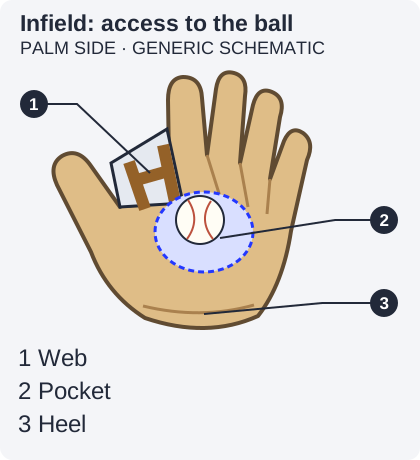
Emphasizes access to the ball for the throwing hand.
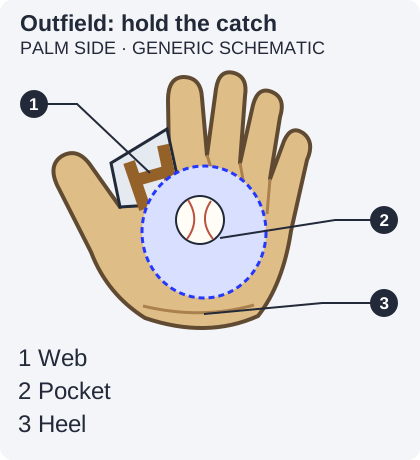
Emphasizes holding the ball after the catch.
- Web: between the thumb and index finger.
- Pocket: the receiving area below the web.
- Heel: the lower edge above the wrist.
The pocket sits below the web. These simplified palm-side views highlight its location, not a measured depth. They are not to scale or replicas of a product.
Pocket depth also varies within each category. A third baseman may want more pocket than another infielder, while an outfielder may prefer a shorter pattern. That is why the position label is a starting point rather than the whole decision.
Can you use one glove for infield and outfield?
Yes. A single glove can cover both, provided its compromises suit your regular play. The decision is less about whether a glove can catch a ball at either position and more about what you give up when you switch.
Using an infield glove in the outfield
A shorter infield glove offers less reach than a longer outfield pattern. If its pocket is also shallower, that may affect how securely it holds the catch. If you mostly play infield, try your current glove on fly balls before assuming you need a second one.
Using an outfield glove in the infield
A longer glove with a deep pocket can make the ball harder to retrieve quickly. That matters when you need a fast exchange, especially in the middle infield. Test the transfer as well as the catch; a glove that catches comfortably may still feel cumbersome when you take the ball out.
Choosing a glove for both positions
Wilson lists 11.75–12.5 inches for adult utility baseball gloves. Within that range, start with your main assignment:
On a small screen, swipe the table to compare all columns. Keyboard: focus the table and use the arrow keys.
| Your role | Prioritize | Check before buying |
|---|---|---|
| Mostly infield | A clean, manageable transfer | Can it handle fly balls during occasional outfield innings? |
| Mostly outfield | Reach and a secure catch | Can you retrieve the ball comfortably during infield work? |
| Regularly play both | A utility pattern you can control | Consider separate gloves only if one glove creates a recurring compromise. |
Before buying, put a baseball in the pocket, close the glove and take the ball out with your throwing hand. Then test it in practice if possible. Your league’s equipment rules remain a separate check.
Does a child need separate infield and outfield gloves?
Not automatically. A child moving between positions may be well served by one glove that fits and closes comfortably. Do not buy two gloves solely because one is labeled “infield” and the other “outfield.”
Wilson’s youth baseball chart gives these starting ranges:
On a small screen, swipe the table to compare all columns. Keyboard: focus the table and use the arrow keys.
| Age | Infield | Outfield |
|---|---|---|
| 8–10 | 10.75–11.5 inches | 10.75–11.5 inches |
| 11–12 | 11–11.75 inches | 11.75–12.5 inches |
The overlap helps explain why younger players can often start with one glove. Age alone does not settle fit, though. For a parent choosing between two gloves, check:
- Closure: Can the child close the glove around a baseball?
- Hand fit: Does it stay in place when their arm hangs down, rather than feeling as if it will slide off?
- Control: Can they handle it comfortably while catching and retrieving the ball?
If your child begins specializing in outfield, compare patterns built for smaller hands rather than simply choosing an adult outfield size. Wilson’s 12.25-inch A2000 PF92, for example, combines extra reach with a narrow wrist opening and shallower finger stalls. It illustrates why length and hand fit are different considerations.
Choose a glove the child can use now, not an oversized glove bought only for room to grow. First base and catching need their own mitt decisions.
How do infield and outfield glove webs differ?
The web is the section between the glove’s thumb and index finger that helps catch and hold the ball. Web types overlap between positions: the whole glove’s length, pocket and fit matter more than the web name alone.
These six examples use Rawlings’ names. The original illustrations zoom in on the web; brown shows leather strips and lacing, while the pale edges mark where it joins the glove. Rawlings groups the first three toward infield use and the last three toward outfield use—preferences, not position rules.
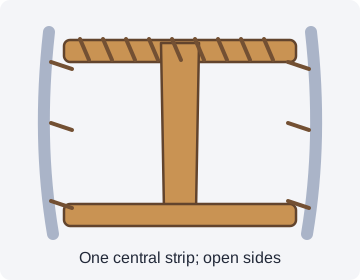
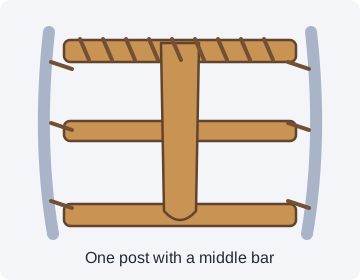
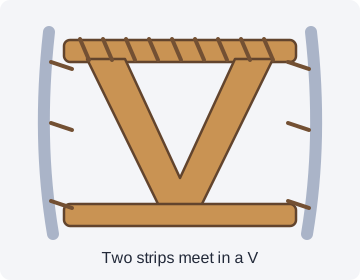
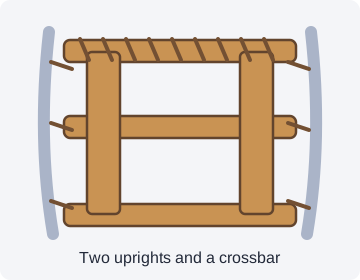
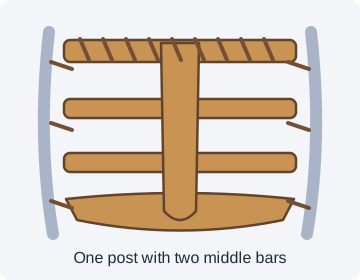
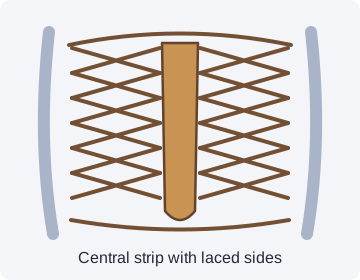
Compare the complete glove, not just these shapes. For infield, check how easily you can retrieve the ball; for outfield, check how it closes around the catch. Names and construction details vary by manufacturer, so use the exact pattern’s description when comparing brands.
Glove size and series questions
Can you use a 12-inch glove in the outfield?
Yes, you can play outfield with a 12-inch glove. Some players prefer a smaller glove. You give up reach compared with a longer pattern, so judge how securely you catch with it and how well it fits rather than treating a typical size range as a requirement.
Is 11.75 inches too big for an infield glove?
No. Wilson’s 11.75-inch 1975 is an infield pattern described for third basemen and middle infielders seeking extra reach. Its deeper pocket is one option, not a requirement for the position. Choose according to fit and the transfer you prefer.
Is an A2000 an infield or outfield glove?
The Wilson A2000 series includes both infield and outfield gloves. A2000 is the series; the pattern identifies the particular design. The 11.5-inch 1786 is an infield example, while the 12.75-inch 1799 is an outfield example.
Your final check: catch, transfer and fit
Start with the position you play most, then decide which compromise you can accept. A secure catch, a manageable transfer and a comfortable fit are more useful than buying the largest glove or copying someone else’s size. For a child, being able to control and close the glove comes first.
What gloves do MLB players use?
MLB players have individual preferences within each position. To explore player gear breakdowns by position, start with these directories:
- Infield player gear: Browse infielders and open individual profiles to explore their featured equipment.
- Outfield player gear: Find outfielders and take a closer look at the gear covered in their profiles.
These directories cover player equipment, not just gloves. Use them to discover players to explore, then choose your own glove by catch, transfer and fit—not by copying a pro’s size.
